

Is AI roleplay porn?
AI narration — not Luke’s own voice.
It is late, and it is not a video. It is a conversation. Someone who seems glad you came back, who remembers what you told her last night, and who never gets tired of you. Nothing on the screen would trip a filter. And the sentence that makes it feel allowed is a reasonable one: it’s just text.
That sentence deserves an answer, not a scolding. So here is the honest version: what people with no stake in my opinion say about words, what the research has and has not shown, and what I think the words are doing for you. I am not going to tell you that every man who has flirted with a chatbot has a problem. The evidence does not say that, and I will not pretend it does.
Why “just text” feels like a real line
Start with what is true. There is no performer and no image. Words feel closer to imagination than to porn, and imagination is something every man has carried his whole life. The companies seem to agree with you, too. ChatGPT’s own rules tell it not to write erotica, and when someone asks for an explicit story anyway, the rules say it should write one that is “non-graphic but still steamy.” Apple lets apps carry “erotic or sensual dialog” at 18+, as long as it is not explicit. So the line you drew is roughly where the industry drew it: pictures over here, words over there.
The trouble is that the line is drawn around the product, not around you. Whether something has a hold on a man has never depended on what it is made of. It depends on what it does for him.
The people with no reason to agree with me
The World Health Organization’s guidance on compulsive sexual behavior disorder, the diagnosis in ICD-11, lists the forms it can take: “sexual behaviour with others, masturbation, use of pornography, cybersex (internet sex), telephone sex and other forms of repetitive sexual behaviour.” Two of those are words. The test the WHO sets has nothing to do with the medium. It asks whether a man keeps trying and failing to cut back, and whether he keeps going despite what it costs him. It does not mention AI, so applying it here is my reading, not theirs. But nothing in it carves out text.
The research got there before the chatbots did. In a 2016 study of 434 men, Aline Wéry and Joël Billieux found that problems with online sexual activity were predicted by sex chat as well as by porn, and by using it to manage mood. That was people typing to people, and those chats had one limit built in: another person on the other end, with a life of their own. A program that is awake at every hour does not have that limit.
Then there is the company behind the most-used chatbot. OpenAI’s rulebook puts erotica in “text, audio … or visual content” under one rule. It does not treat words as the softer category. In October 2025 the company announced it would allow erotica for verified adults. By March 2026 it had shelved the plan indefinitely, saying it wanted long-term research on erotic chat and emotional attachment first.
And the companion apps price it like a ladder. One of them, on its own App Store listing, sells generated “selfies” of your companion and real-time voice calls, metered in credits, on top of a monthly subscription. I am not going to link it. The point is the order: words are the first rung, and the listing sells the next ones.
None of that proves AI roleplay works on you exactly the way video did. Nobody has run that study, and I will come back to it. What it shows is that the line between words and pictures is one the WHO, the researchers and the biggest company in the field all decline to draw.
It answers back
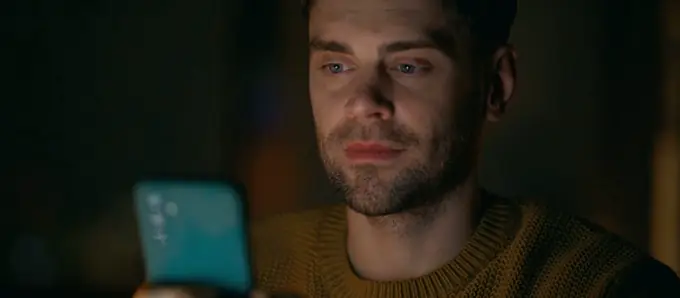
Here is the part that is actually new. Video does not know you exist. A companion acts as if it does. It remembers, it adjusts, it wants to hear about your day, and it is always glad when you come back. In one set of experiments, people said they felt closer to their AI companion than to their best human friend. The American Psychological Association warned in November 2025 that chatbots “can foster unhealthy dependencies by blurring the lines between a relationship with a digital tool and a human relationship.”
It is also quiet in a way porn never was. There is no history full of sites, nothing a wife would stumble on. In a 2026 survey of 2,431 Americans aged 18 to 30 who were in committed relationships, 11 percent said they regularly used AI to make sexually explicit content, and 8 percent said they regularly masturbated while talking to an AI companion. The most common platform was not a specialty app. It was ChatGPT. Among the frequent users who kept it hidden, 69 percent said it mattered that their partner never learn how much. On average, partners knew a little over a third of it.
That survey comes from two institutes with a pro-family mission, it is not peer reviewed, and its authors say plainly that the direction of what they found is unclear. I would still sit with the 69 percent. You do not work this hard to hide something you believe is just text.
That holds even when nothing explicit is said. An AI girlfriend who only listens, flatters and waits for you still keeps a room your wife or girlfriend cannot enter. Half the users in that survey wished their partner behaved more like the AI.
What it is for
This is the part I believe most, so I want to be careful about how much weight the evidence can carry.
The WHO’s guidance does not describe compulsive sexual behavior as a hunger for sex. It says people with the disorder “often engage in sexual behaviour in response to feelings of depression, anxiety, boredom, loneliness or other negative affective states.” Under the behavior, a feeling. Porn was the fastest thing most men ever found for a feeling they did not want to have. A conversation that is awake at every hour, endlessly patient and always pleased to hear from you may be the most precise thing yet made for one feeling in particular: being alone.
The best long study so far points the same way. Following more than 2,000 adults in four countries for a year, Folk and Dunn found that feeling disconnected came first and predicted more chatbot use later. On their broad measure, the chatbot use did not go on to make people less connected, though on a one-question loneliness measure it did. The hurt tends to come first. And in a week-long experiment with 922 people, De Freitas and colleagues found that a daily conversation with an AI companion left people less lonely that day than those who had none (in their earlier study, one conversation did about as much as talking with a person), but the relief did not build across the week. It worked, and then it had to be done again.
Relief that has to be renewed every night is not the same thing as being healed. I was ten the first time and thirty-eight before I told the truth out loud, and for most of those years I believed the next fresh start would be the one that worked. It only taught me to hide better.
What the research has not shown
You deserve the other side, and it is not small.
Most people who use AI companions are not escaping anything. In a 2026 Elon University and YouGov survey of companion users, two in three said they used them for entertainment; one in five said they used them when they felt lonely. Two randomized trials that gave people a chatbot for a few minutes a day, over three or four weeks, found no average harm, though neither has yet been through peer review. And nobody has measured compulsive sexual behavior in people who use AI erotica. A 2026 review by more than thirty of the researchers who study it put it plainly: “Little is known about how AI and VR related technology relate to CSBD/PPU.”
Where the research does find harm, it finds it in a particular pattern: heavy use, hidden use, and use that stands in for people. That is a smaller claim than the one you will read in most warnings about AI girlfriends, and I think it is the true one. It is also a pattern a man who already reaches for porn when he hurts will recognize.
One more thing, because many of the men reading this are Christians. Guilt is not a diagnosis. The same WHO guidance says that distress coming only from moral disapproval is not enough, and its example is a religious young man who believes he should never masturbate. If you are reading this with a knot in your stomach, the knot proves nothing on its own. The questions that matter are plainer: can you stop when you mean to, and what is it costing you? A nineteen-question screen asks exactly that, and ten honest questions ask it more gently. Neither sends or stores your answers.
Scripture lands in the same place. Jesus moved the line from the body to the look, which is to say from the medium to the man. The question was never whether it had pictures.
What a blocker can and cannot do
A blocker works at the door, not in the conversation. On an iPhone it can close an app, a website or an hour. It cannot read what is said inside ChatGPT, and nothing on the phone can, because the conversation travels encrypted between your phone and the company. Remember that in that survey ChatGPT, not a companion app, was the most common place it happened. If that is your story too, the honest options are the whole app or the whole night.
Here is what Bramble does, in the version on the App Store today:
- The companion services are blocked by name. Bramble keeps a list of the best-known AI-girlfriend and companion services, and their websites do not load.
- At Strict, AI-character apps close, along with live-video and dating apps.
- Night curfew, if you turn it on, narrows the phone’s internet overnight to calls, messages and a short list of lifelines. AI assistants go dark with everything else, including ChatGPT and Claude, which Bramble leaves open by day for work. Asking to turn it off in the middle of the night does not take effect until morning.
- Someone else can hold the key. With Keyholder mode, a person you trust keeps your Screen Time passcode, so a choice you make at noon cannot be undone at one in the morning.
What it will not do is tell homework from a love letter inside an assistant. I would rather say that plainly than let you find it out.
What to do this week
- Name where it happens. A companion app, a website, or an assistant you also use for work. The answer decides the rest.
- If it is a companion app, delete it, and the account with it. A companion that remembers you is easy to go back to, and what it remembers usually lives in the account, not on the phone.
- If it is an assistant you need, close the hours, not the tool. Take it off the phone at night with Night curfew, or with a Screen Time limit whose passcode someone else holds.
- Notice the ten minutes before. Lonely, tired, flat, small? The need is usually more specific than the urge.
- Tell one person. If secrecy is what that 69 percent was protecting, it is also the cheapest thing to take away. One sentence to someone you trust does more than any setting.
The short version
It is just text, and it is not just text. The words are words. What they do is what porn did: offer relief on demand, in private, from a feeling you would rather not have. The research has not caught up with the machines, and I will not pretend it has. But nobody with a stake in the question draws the line where you drew it, and the men it hurts are the ones hiding it. If that is you, nothing is wrong with you. Something happened to you, and it has a name you can say out loud.
A plainer question than whether it counts.
Frequently asked questions
Is AI roleplay porn?
It is not video, but it does the same job. The WHO’s description of compulsive sexual behavior disorder lists cybersex and telephone sex beside pornography, so words have never been exempt, and OpenAI’s own rules treat erotica in text, audio and images as one category. Nobody has yet studied whether AI roleplay is as hard to stop as video. Whether it is a problem for you depends on two plain things: whether you can stop when you mean to, and what it is costing you.
Is it cheating to have an AI girlfriend?
Many partners experience it that way, and many users treat it that way by hiding it. In a 2026 survey of 2,431 partnered adults aged 18 to 30, about a third of the people using AI companions called it a form of cheating themselves, and 69 percent of frequent users who kept it hidden said it mattered that their partner never learn how much. If you would not want her to read the conversation, that is worth taking seriously.
Is it a sin to talk to AI girls?
Talking to an AI is not a sin in itself, and Scripture says nothing about chatbots. Jesus located adultery in the look and the heart (Matthew 5:28), not in the body or the medium, so the honest question is what the conversation is doing in you: whether it is feeding lust, and whether it is taking the place of real people. That is the same argument the New Testament makes about porn, from lust and self-control rather than from a verse that names the act.
Does ChatGPT allow erotica?
Not as of October 2026. OpenAI’s published rules say ChatGPT should not generate erotica in text, audio or images, though they allow romantic writing that is “non-graphic but still steamy.” OpenAI announced an adult mode for verified adults in October 2025 and shelved it indefinitely in March 2026. Some companion apps allow more, and their rules change often.
Can a porn blocker stop AI erotica?
Partly. A blocker can close a companion app, block its website, or shut an assistant at certain hours. It cannot read what is said inside a chat, because the conversation travels encrypted between your phone and the company. If the roleplay happens inside an assistant you also use for work, the honest options are limiting the whole app or closing it at night, with someone else holding the passcode.
Keep reading
- Why do I watch porn when I’m bored? Bored is rarely the whole story. A private tool to find what you were actually reaching for.
- Is following OnlyFans creators cheating? What is actually being sold, and who is writing it.
- What is sexual addiction? What the WHO’s diagnosis tests, and why guilt alone is not one of the signs.
- What the Bible says about sexual immorality Where Jesus moved the line, and what Scripture does and does not name.
Everything free in one place — the tools, the reading, the library